.svg)
A manufacturer suffered from a high failure rate with the end-of-line test for an electronic throttle. Despite throttle components having passed every quality check up to that point, some 200 engines were facing rework—a significant repair cost.
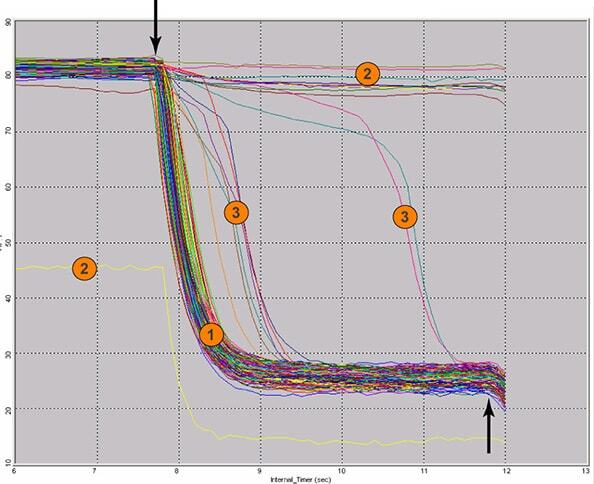
By analyzing the digital process signatures captured during upstream vacuum testing (see image), quality engineers determined that only total failures (#2 in this image) were being caught. Why? Because only start and stop pressures were used to determine pass/fail in the test (as indicated by the arrows), some defective throttles were still passing the test (#3 in this image). These subtle failures were enough to be causing problems at the end of the line.
With this insight, test algorithms and limits on upstream test stations could be adjusted to ensure only quality parts passed. This reduced the manufacturer’s failure rate to 0.07%, or 10 engines a month—increasing overall output by 170 engines per month!
Optimize Your Tests From Day One with Smart Solutions

Set up, refine, and evolve your manufacturing tests with precision. Sciemetric gives you the tools to measure what matters, analyze results, and take fast action—from initial setup through to continuous optimization.
.webp?width=1900&height=1425&name=sigPOD-part-status_1900x1425%20(1).webp)
Process Monitoring & Measurement
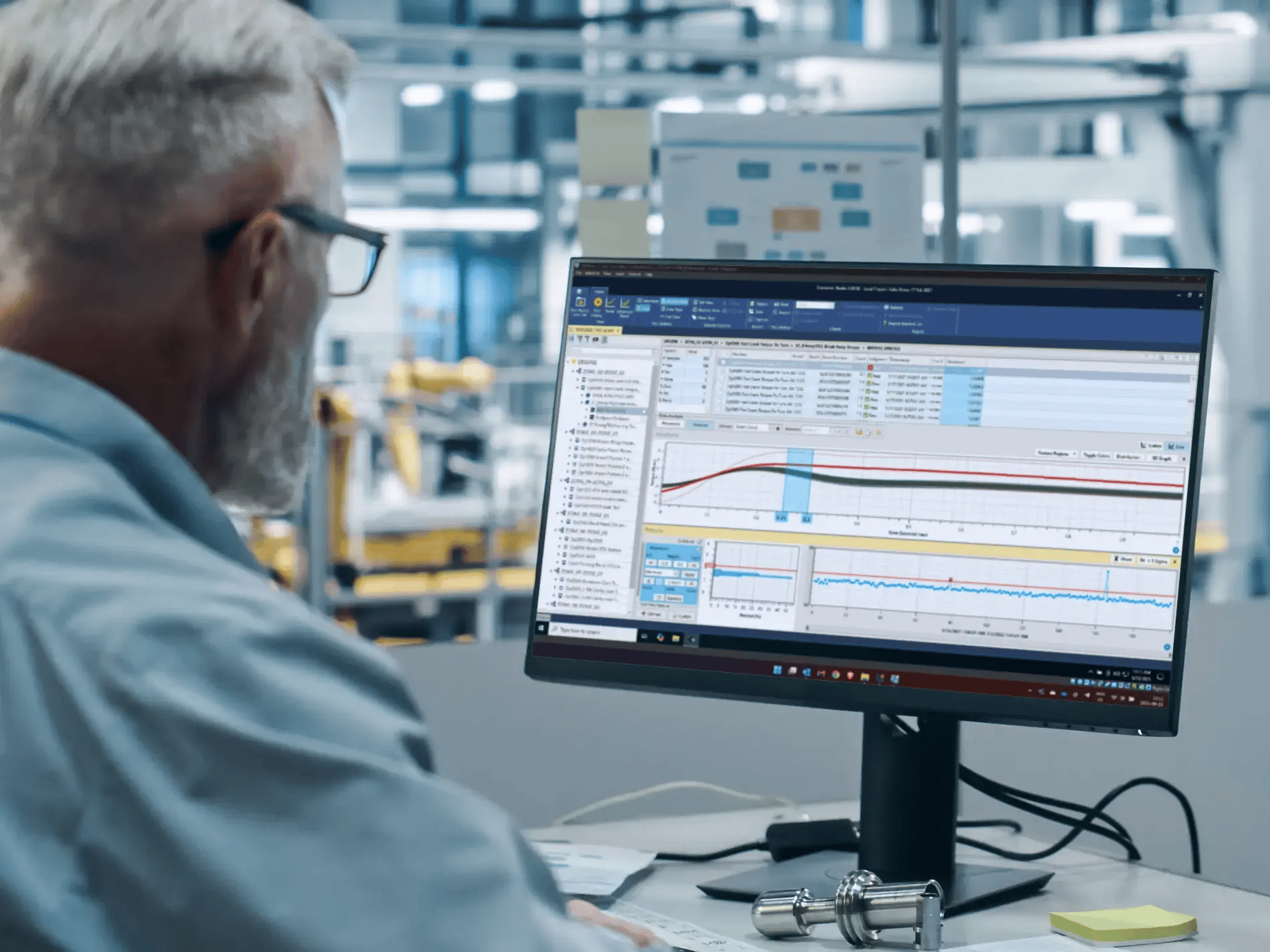
sigPOD captures critical data at the station level to help you eliminate guesswork during test setup. Get immediate insight into your tests, detect defects early, and gather data for process optimization.
Data Analysis & Continuous Improvement
QualityWorX provides the analytics engine to dig deep into test data. Visualize trends, compare results across parts, tighten limits, and fine-tune performance to drive quality and efficiency—even as your line evolves to handle new parts or tighter tolerances.
Optimization saves manufacturer $617,000/year
With Sciemetric, a manufacturer of small engines reduced the number of stations for its carburetor leak test stations from seven to four. The cost of this investment amounted to $200,000, but the annual savings added up to $617,000. That yielded a return on the investment in four months.
Reduce cycle time
Manufacturer uses Sciemetric technology to reduce cycle time from 5 minutes to 115 seconds – while boosting Gage R&R. READ THE FULL STORY
Achieve 4x faster cycle time
Manufacturer leverages Sciemetric technology to achieve 4x faster cycle time. READ THE FULL STORY